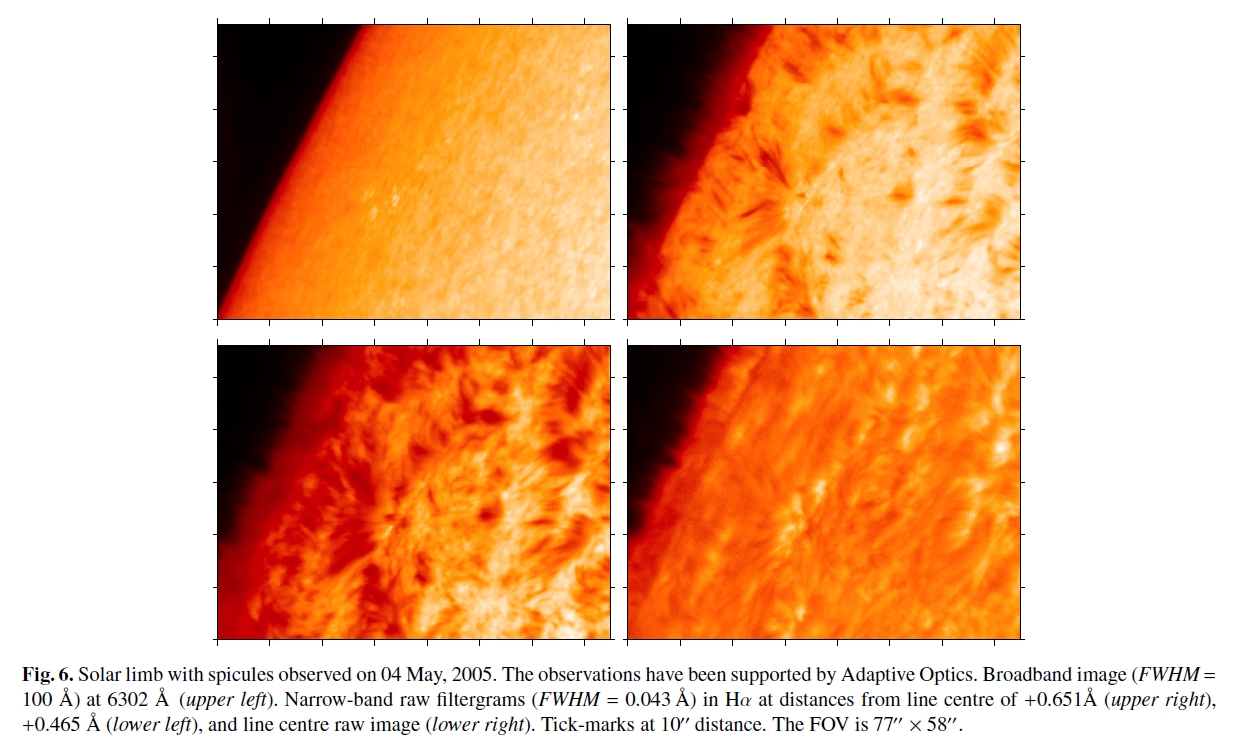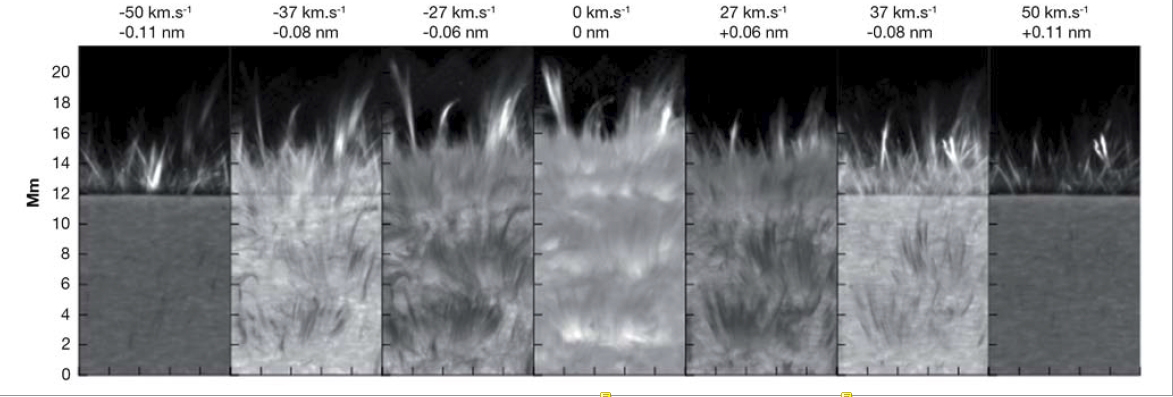
SST - CRISP SpectroPolarimeter - Double-stacked (high-resolution and low-resolution) etalons in telecentric beam. FHWM = 0.06 A.
Source
: Pereira et al, The apparence of spicules in high resolution observations of Ca H and Ha. Astrophysical Journal, 2016.
Very-high resolution spectrum of the solar limb - NSO/SPO 16-inch coronagraph
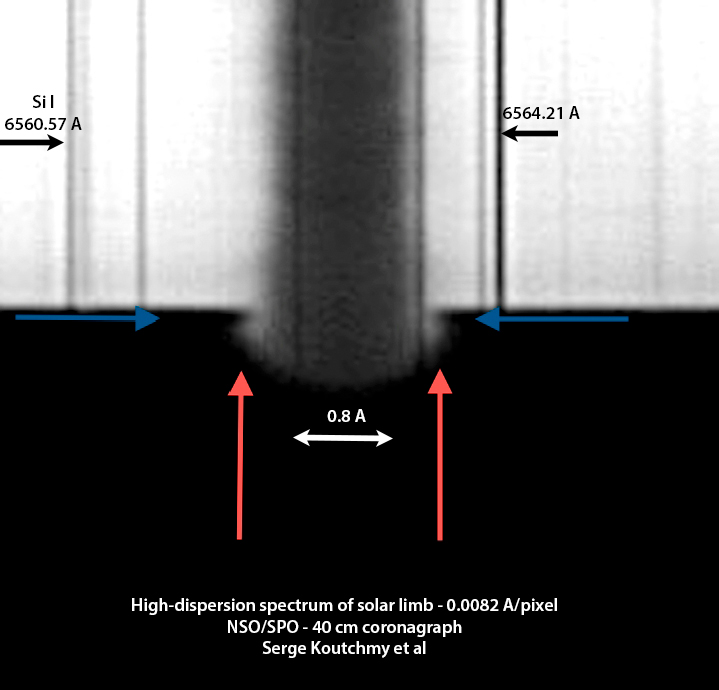
The 0.8 A central part of the Ha line corresponds to the highest level of the chromosphere visible in the Ha line.
Any etalon having part of its transmission curve beyond this central
window of 0.8 A (i.e. Ha ± 0.4 A) will pass light from the
lower levels of the chomosphere, and possibly of the photosphere.
For comparison:
- In a collimated beam, the bandpass at 10% peak transmission of a
double-stack Lunt 40 is 1.0 A, and the bandpass at 10%
peak transmission of a 0.3 A etalon (such as the one of the Heliostar
76) is 0.9 A. This explains why the double-limb effect is not visible
with these two configurations (when properly tunned to the center of
Ha).
- In a telecentric beam, the double-limb effect is barely visible
at f/35 with a double-stack Lunt 40 (bandpass at 10% peak transmission
= 1.3 A) and completely invisible at f/42 ( bandpass at 10% peak
transmission = 1.1 A).
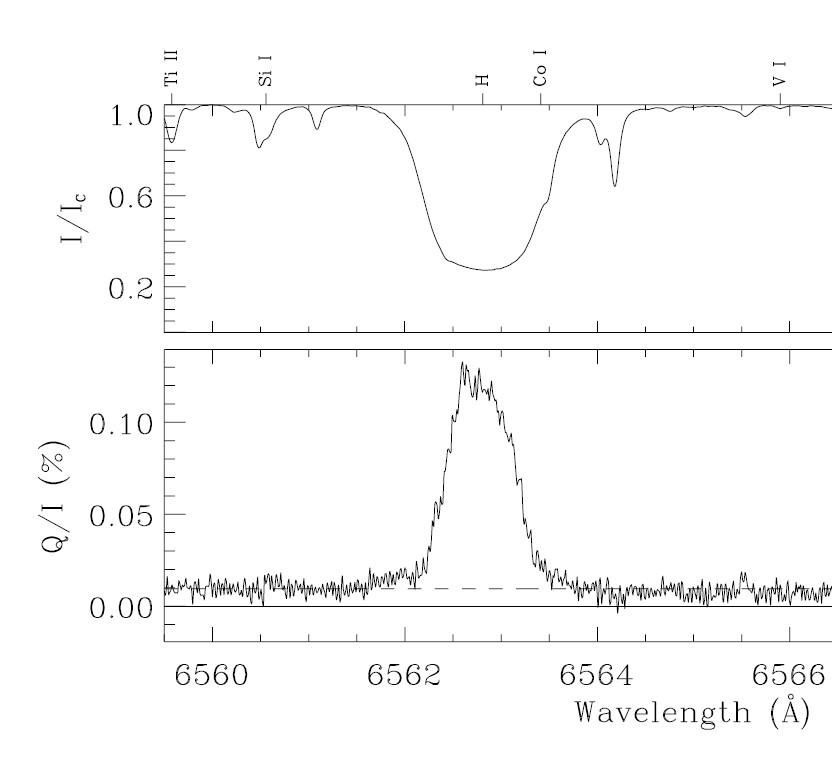
Solar limb spectrum extracted from the Second Solar Spectrum (SS2) atlas (for comparison with the NSO/SPO spectrum).
Source:
https://www.irsol.usi.ch/it/data_archive/ss2
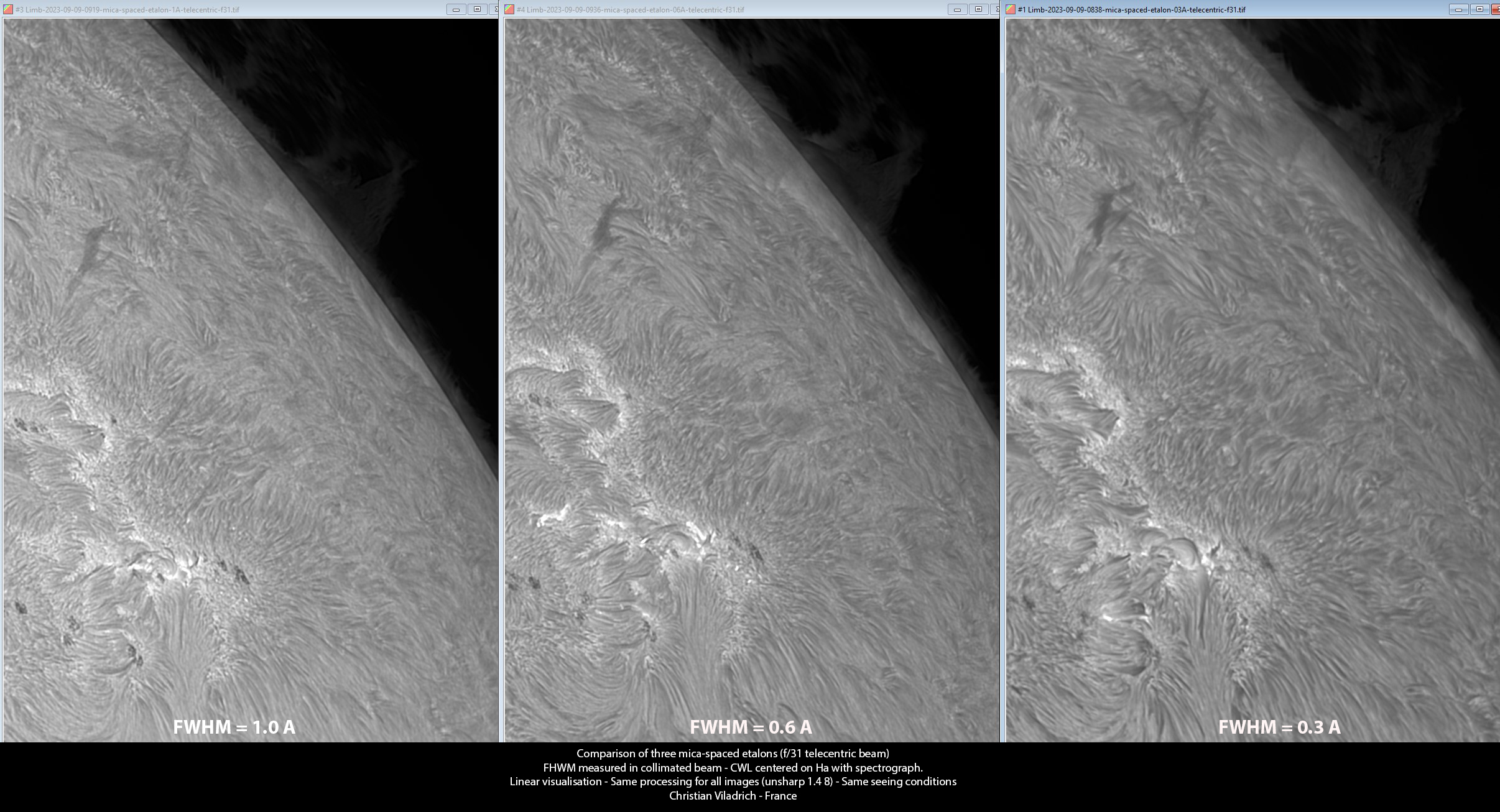
In a telecentric beam
The double-limb effect is visible with a single-stack 0.3 A mica-spaced etalon at f/31:
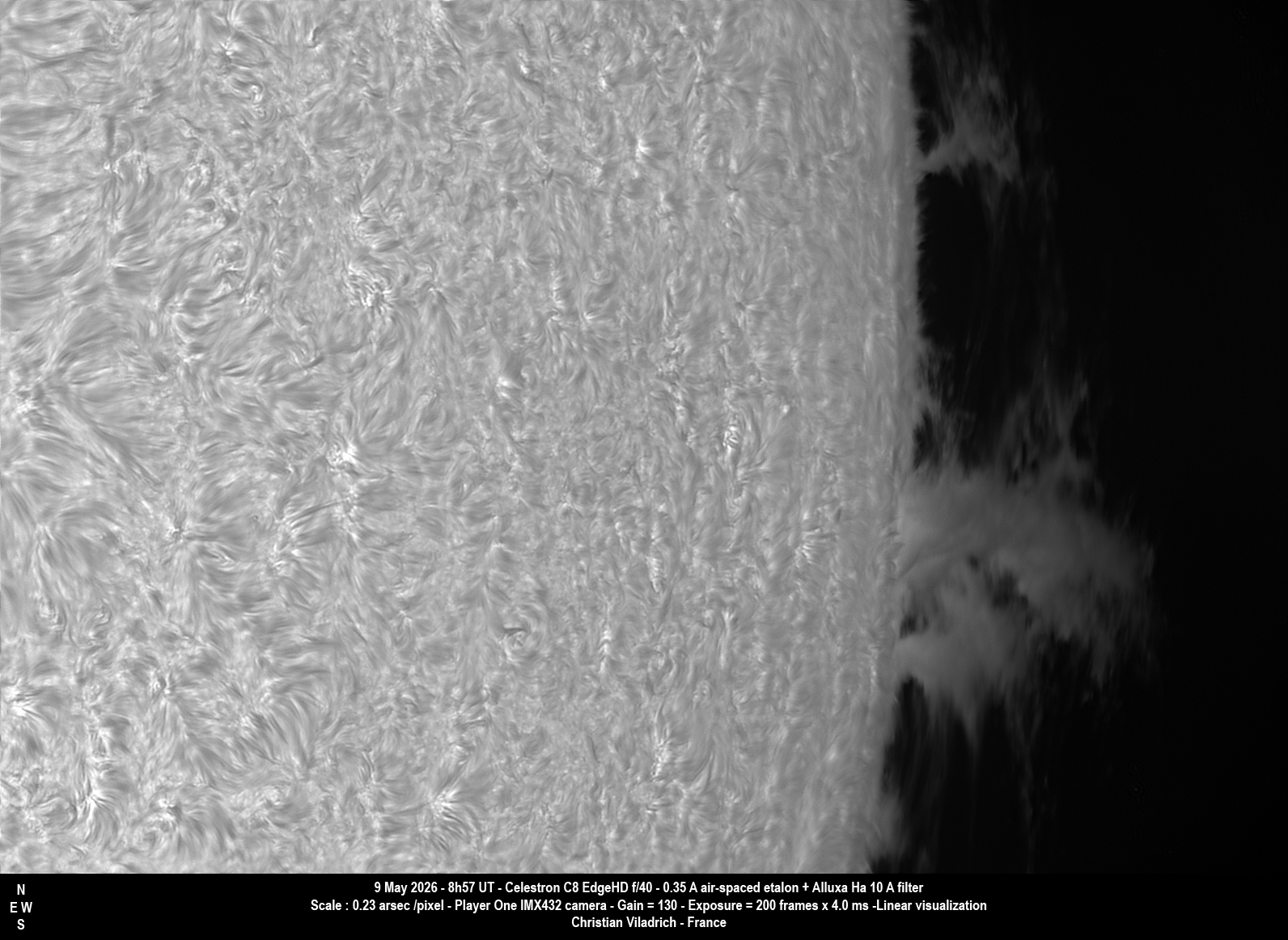
The double-limb effect is visible with a single-stack 0.35 A air-spaced etalon at f/40 (etalon tuned on Ha):
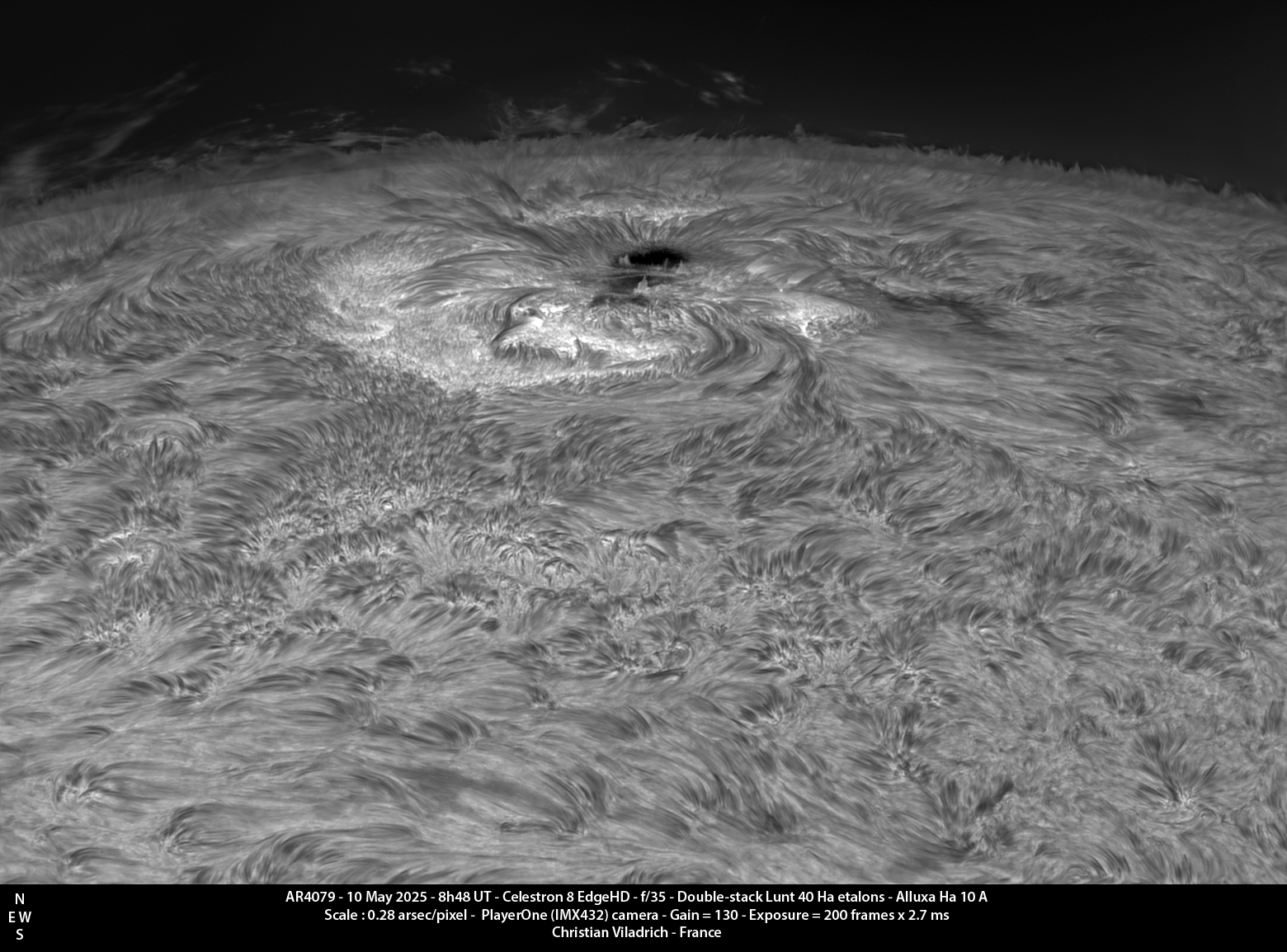
The double-limb effect is visible with a double-stack 0.7 A air-spaced etalon configuration at f/35 when CWL = Ha - 0.3 A:
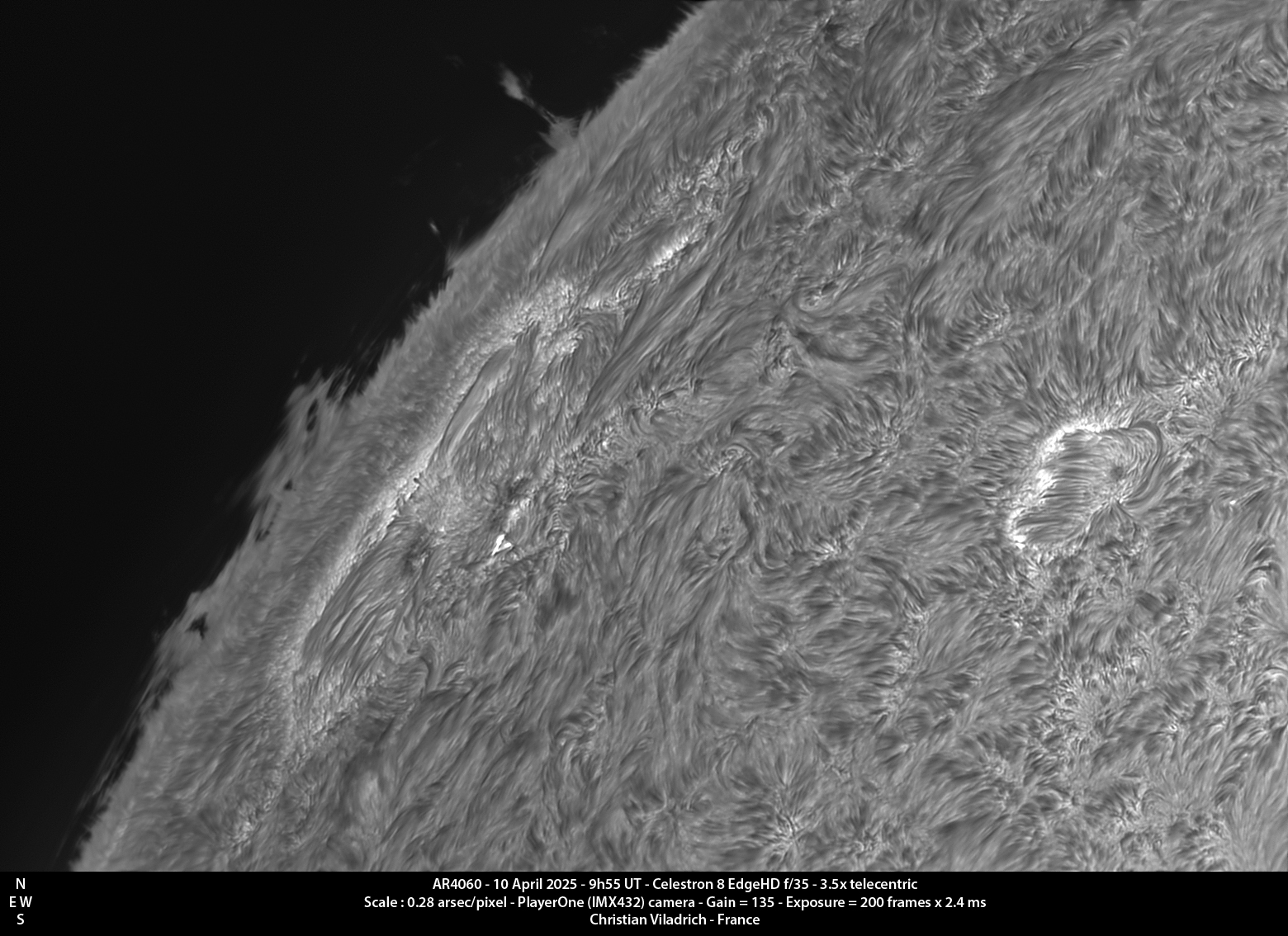
 The double-limb effect is barely visible at f/35 when the center wavelength is right on the center on the Ha line:
In a collimated beam
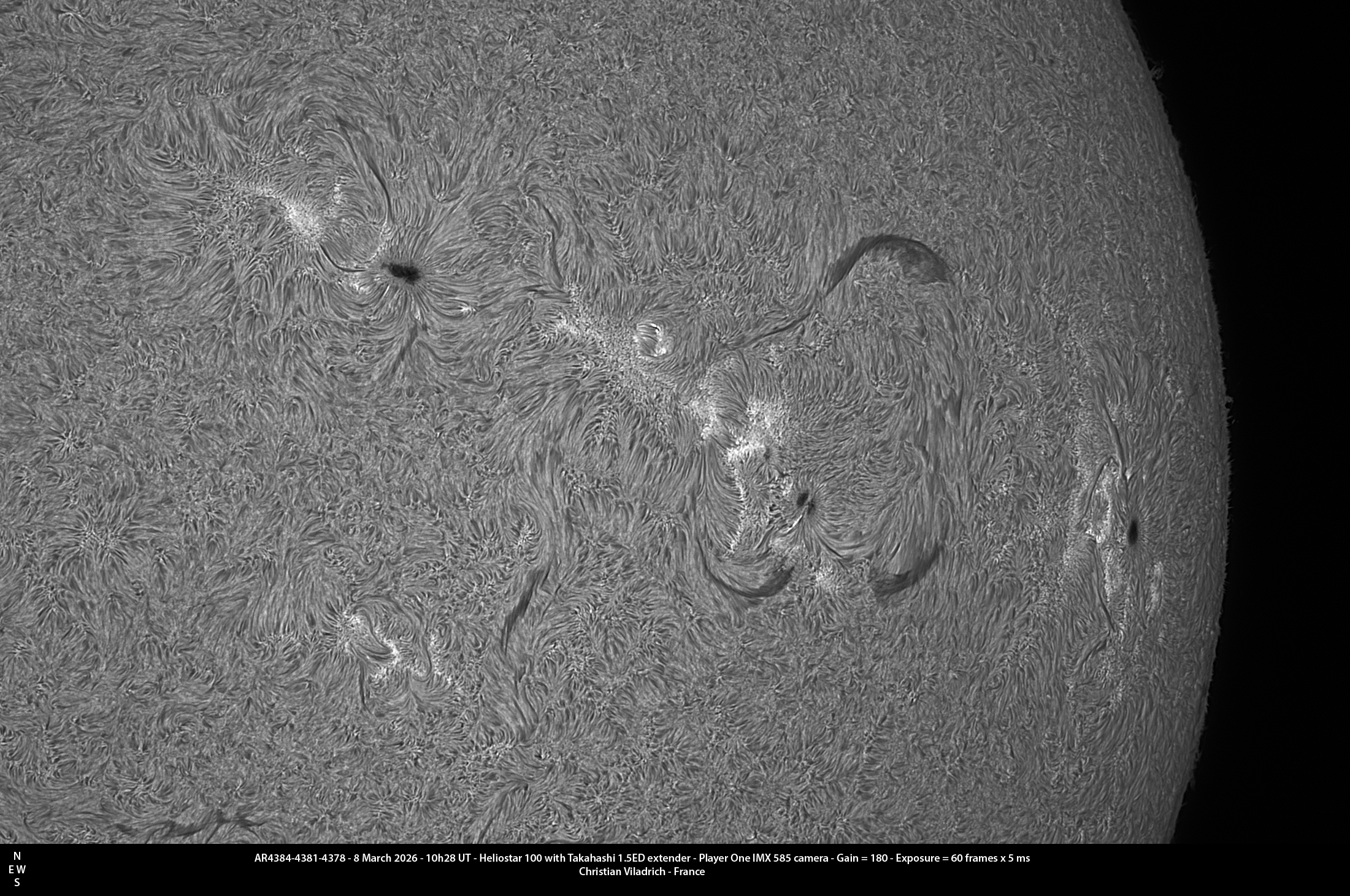
The double-limb effect is faintly visible with a single-stack 0.3 A etalon:
The double-limb effect is not visible with a double-stack 0.65 A etalon configuration:
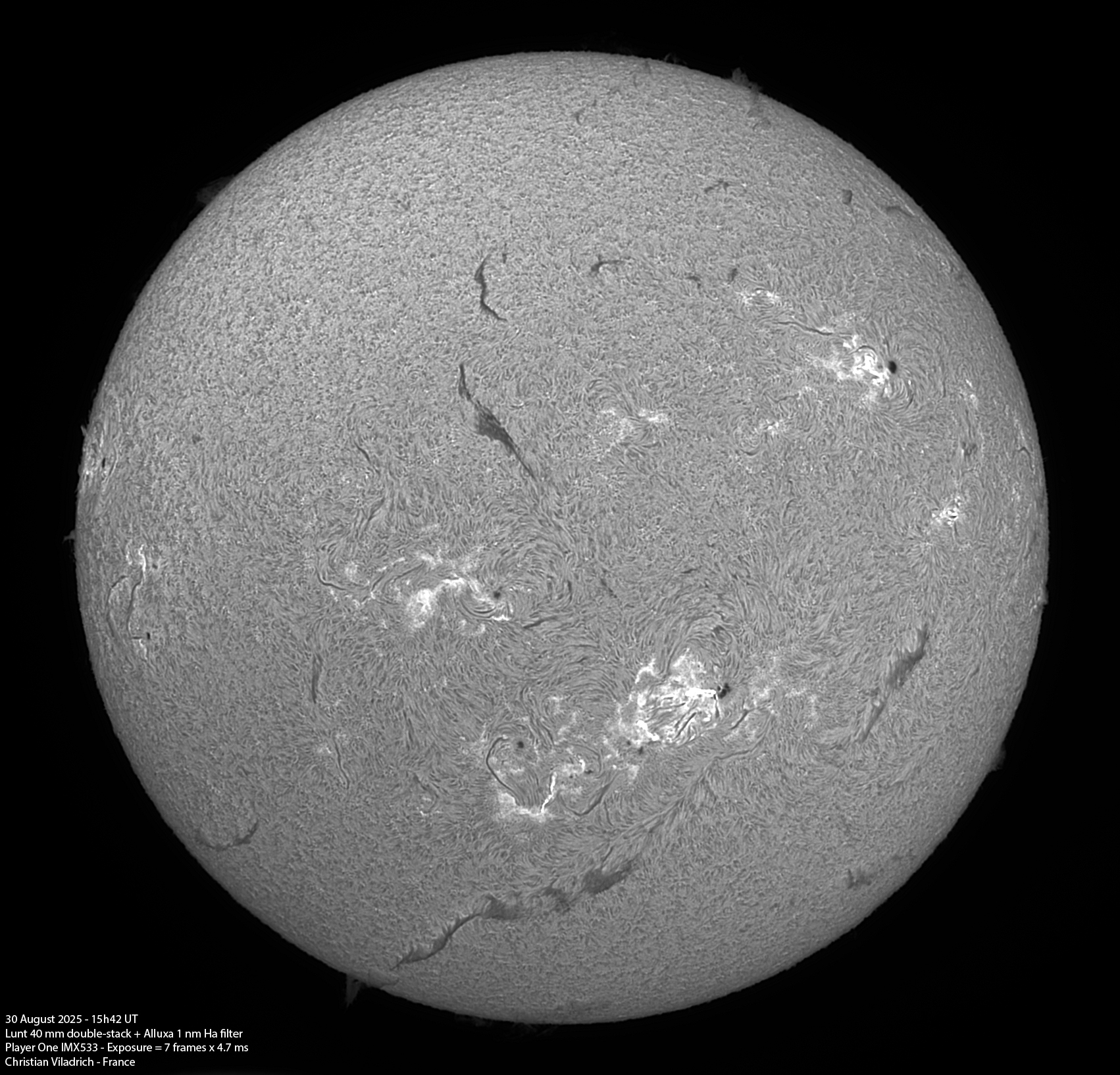
Reference comparison images: from 0.7 A to 0.4 A
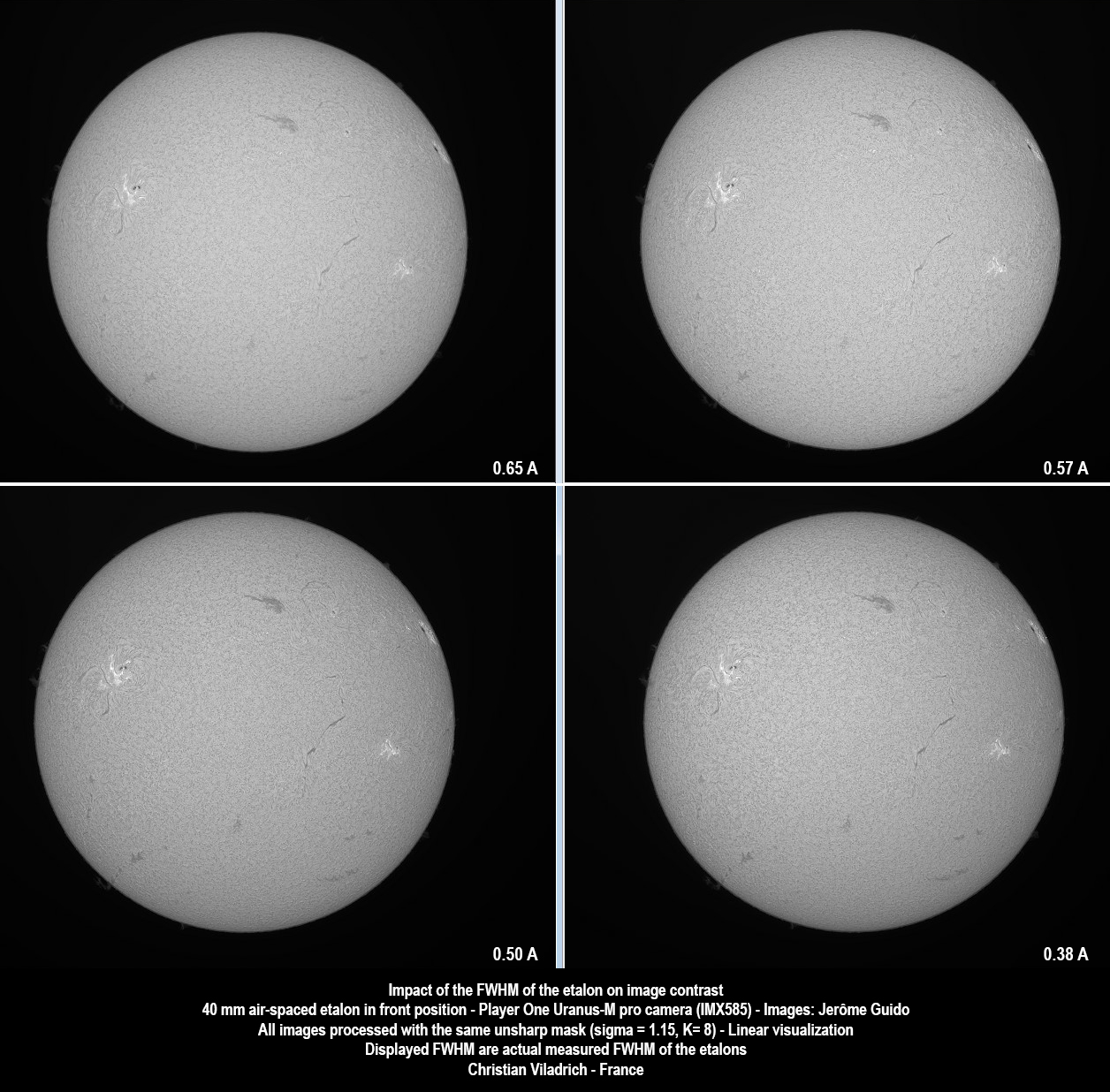
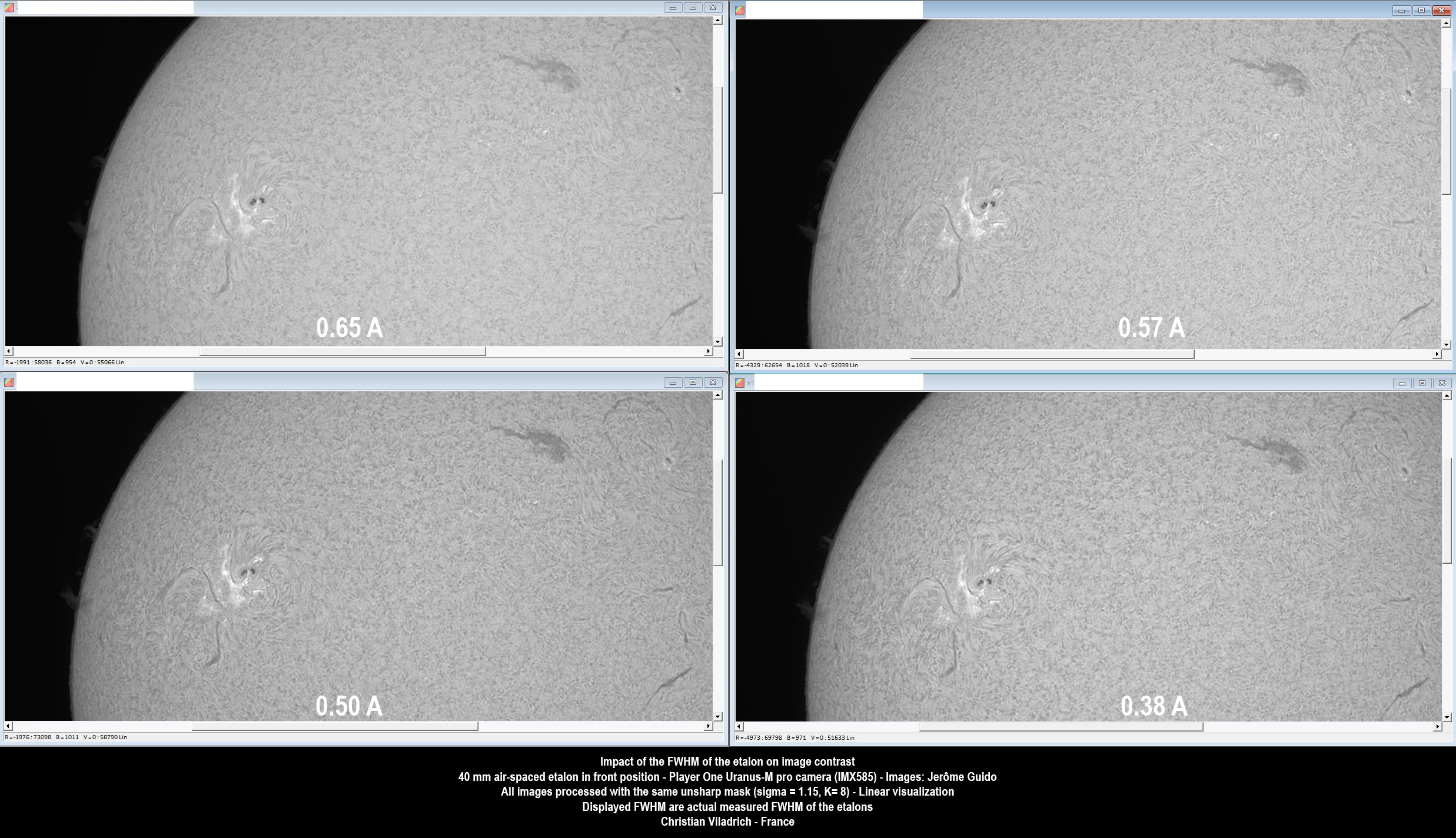
Reference disk images - 1 m Swedish Solar Telescope
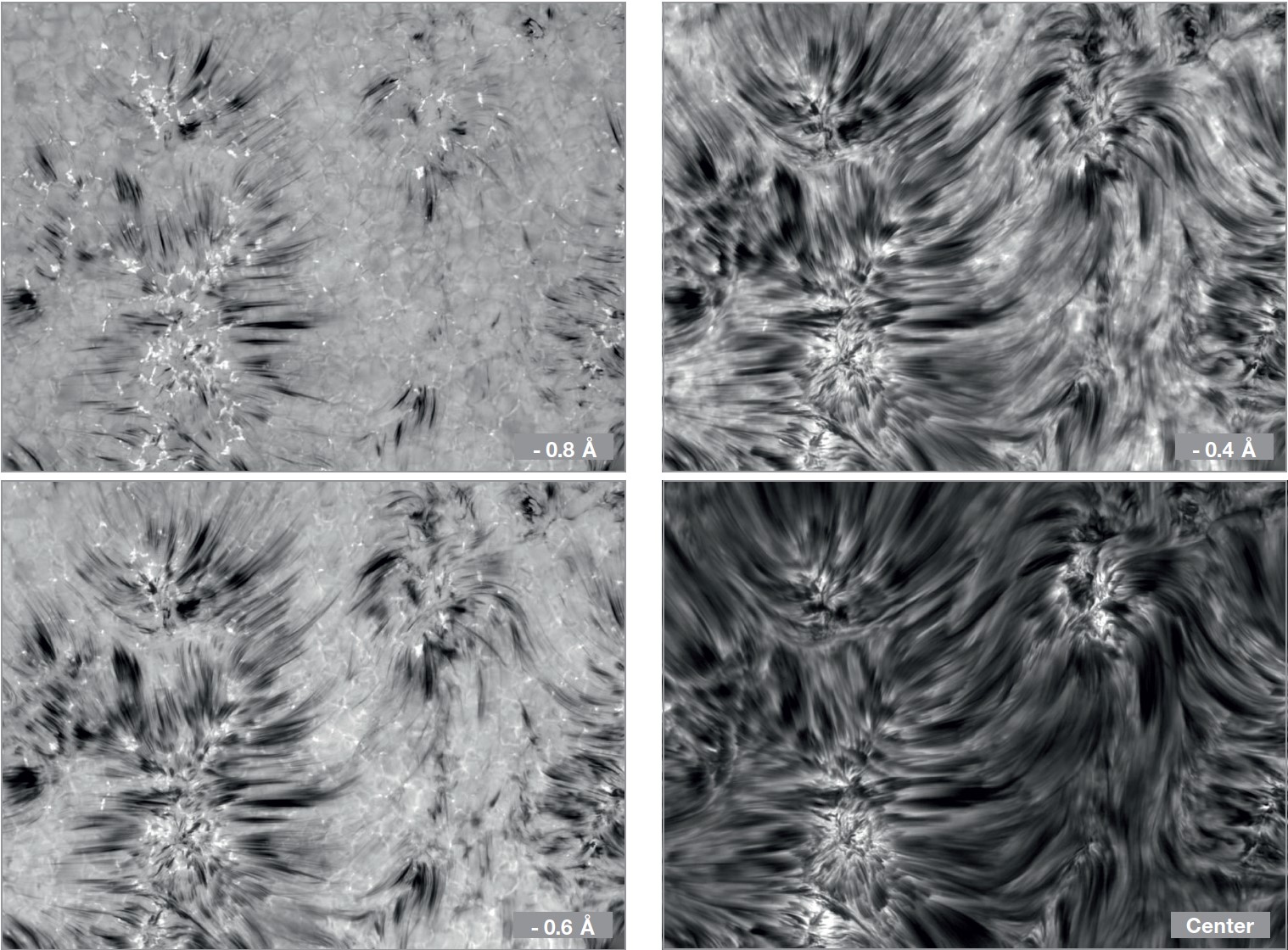
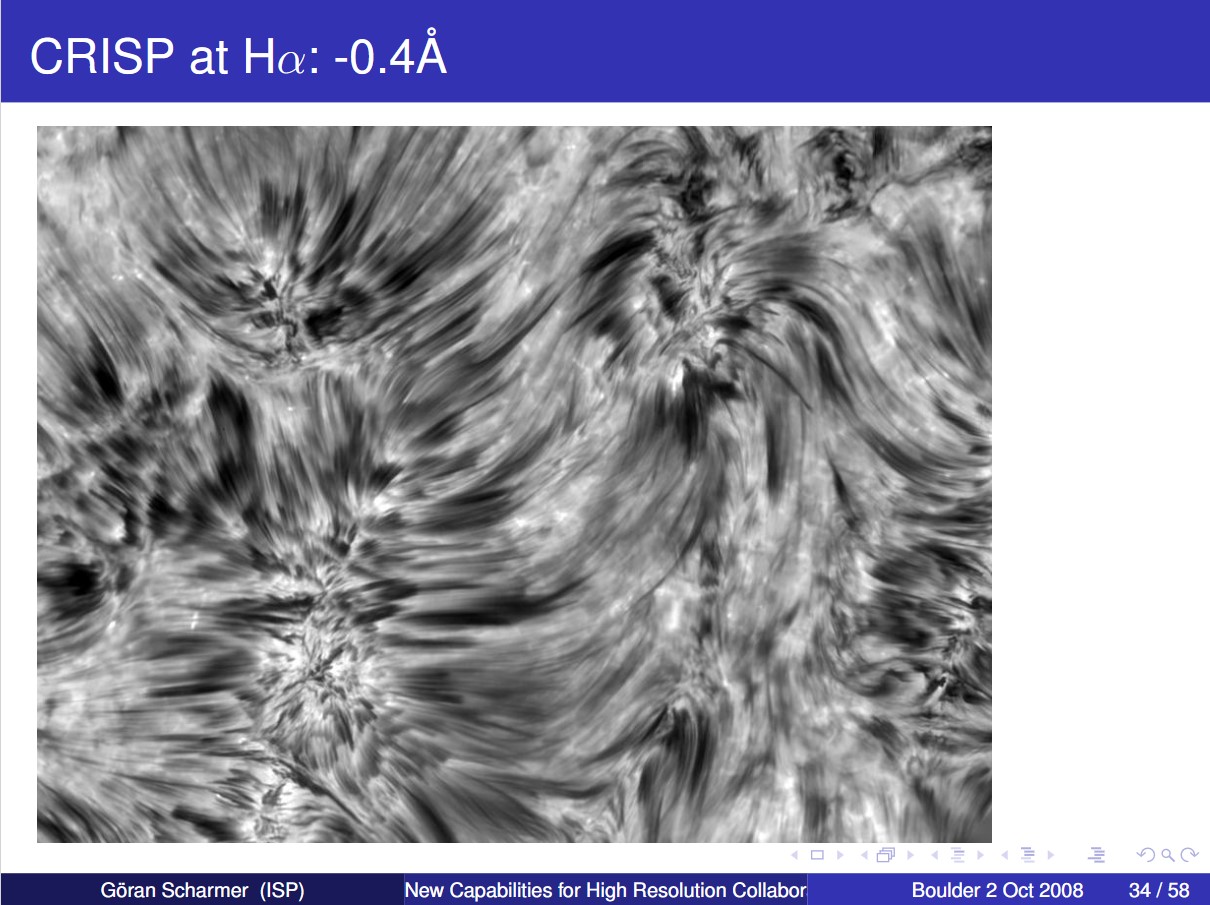
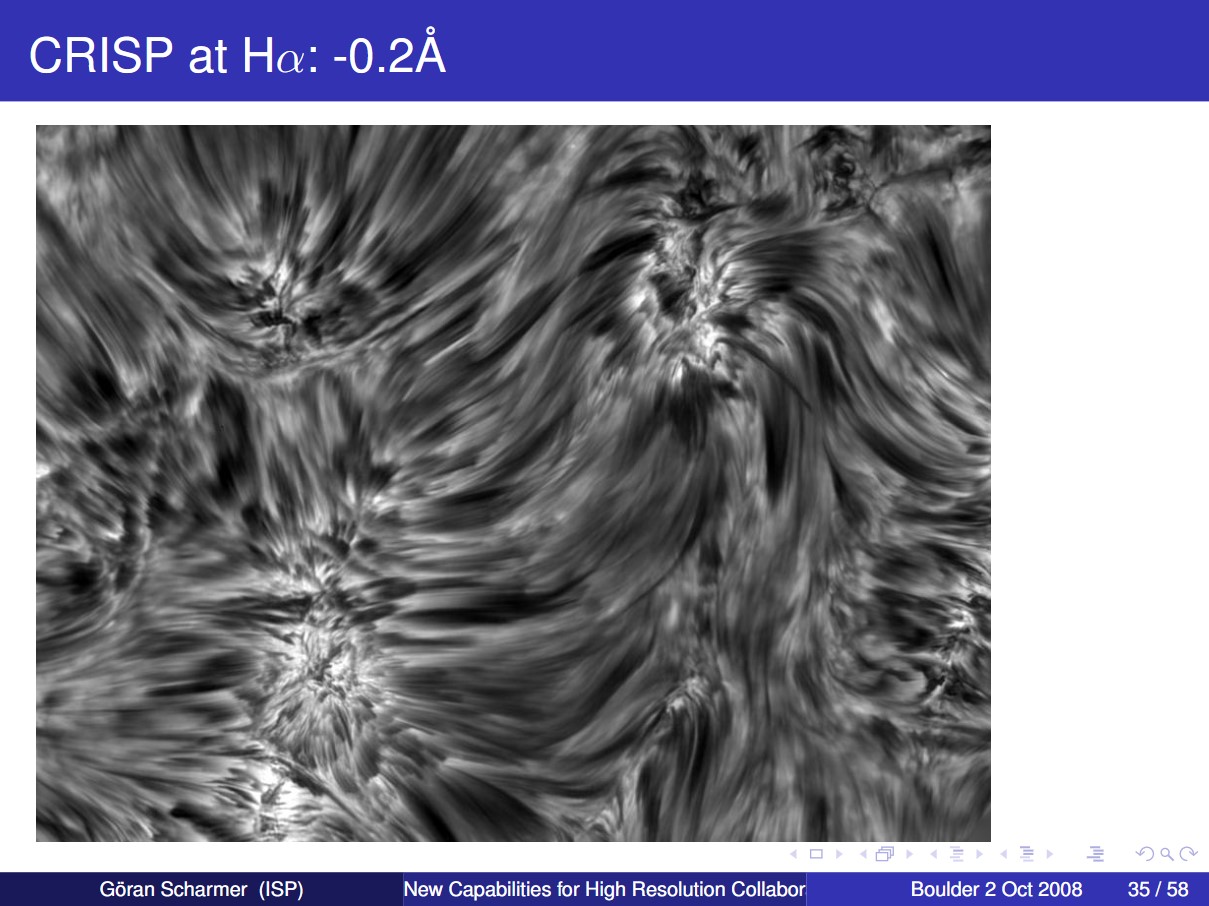
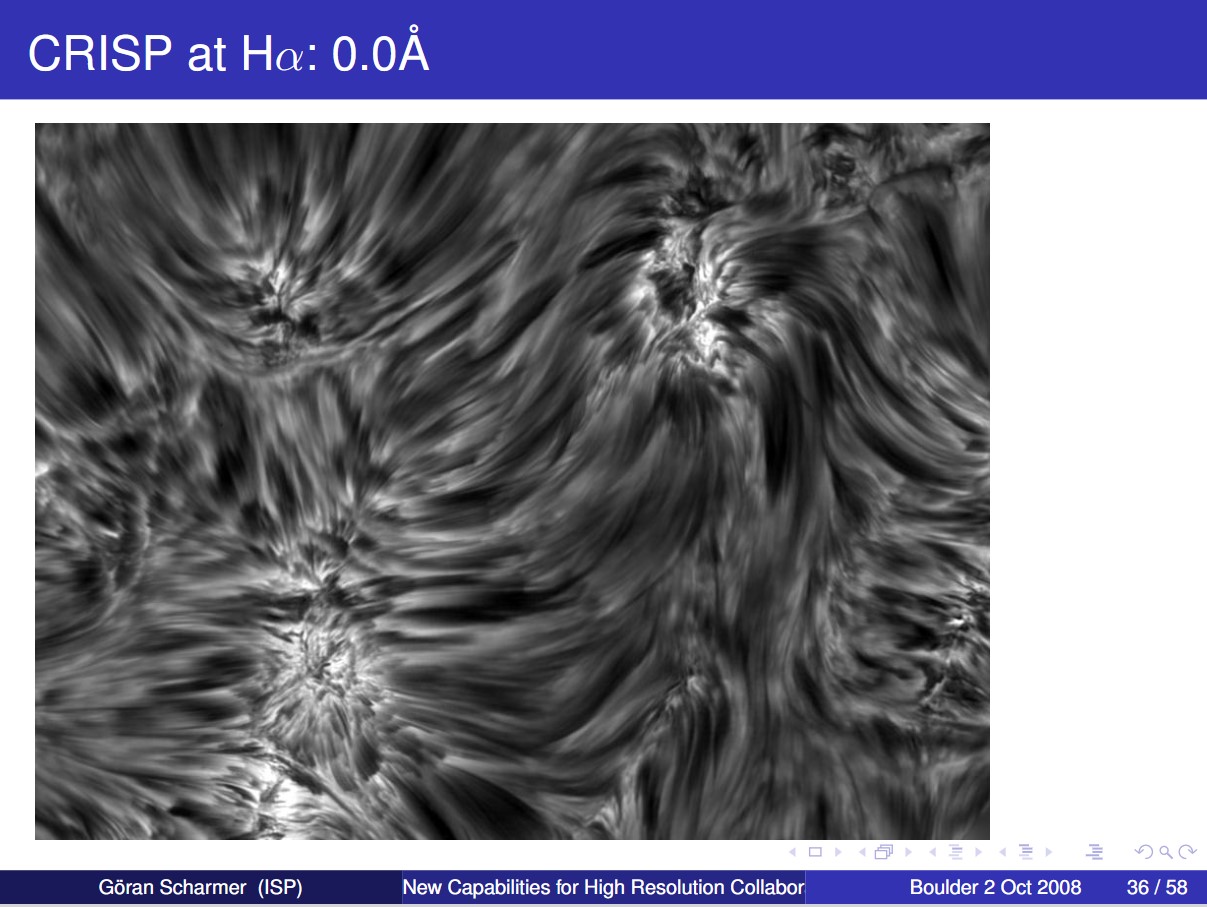
Influence of the position of the filter center wavelength within the
Hα line (respectively -0.8 Å, -0.6 Å, -0.4 Å
and line center).
1-m Swedish Solar Telescope, CRISP spectropolarimeter, bandwidth
of 0.06 Å FWHM (obtained by two etalons in telecentric
configuration), adaptive optics and image reconstruction. The field
covers about 70".
Source: Goran Scharmer, Luc Rouppe van der Voort, New Capabilities for
High Resolution Collaborative Studies with the Swedish 1-m Solar
Telescope, The Institute for Solar Physics, Second Hinode Science
Meeting, 2008
https://www.hao.ucar.edu/partnerships/hinode/conference-2008/presentations/Session5/T5-1_scharmer.pdf